


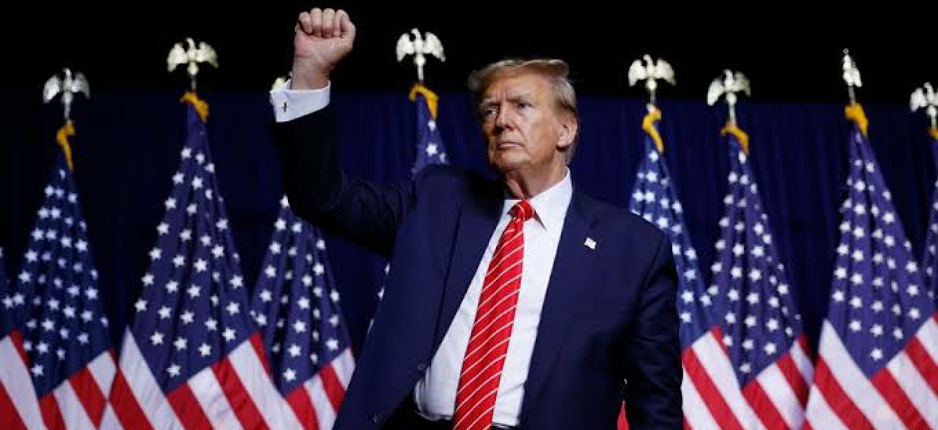
U.S. President-elect Donald Trump has made his first major cabinet appointment and hinted at a sharp pivot in foreign policy by engaging with Russian President Vladimir Putin. Just days after his resounding victory over Democrat Kamala Harris, Trump appointed his campaign manager Susie Wiles as White House chief of staff, marking her as the first woman to hold the influential role and his administration’s first major appointment.
Trump’s overwhelming defeat of Harris has already sent shockwaves through American and global politics. Russian President Vladimir Putin praised Trump’s “courage” in the face of adversity, particularly after surviving an assassination attempt in July, and expressed eagerness to work together. Though Trump noted he had not yet spoken directly with Putin, he indicated that contact was imminent, a stark contrast to the tense silence that marked Biden’s relationship with the Kremlin since Russia’s 2022 invasion of Ukraine.
The president-elect’s comments on Ukraine are causing a stir; Trump has previously promised to pursue a peace deal, though Ukrainian President Volodymyr Zelensky, who reached out to Trump shortly after his win, warned that such moves could prove “dangerous” if they lead to a ceasefire favoring Moscow.
Meanwhile, Trump is doubling down on his controversial campaign promises, reaffirming his intent to implement sweeping mass deportations of undocumented migrants. “No price tag is too high,” Trump told NBC News, calling the policy a necessity for America’s future. Critics, including Harris, condemned Trump’s firm stance on autocrats, with Chinese President Xi Jinping joining other world leaders in congratulating Trump.
As Trump begins the transition process at his Mar-a-Lago resort in Florida, President Biden, in a televised address, promised an orderly handover of power. Biden urged Americans to lower the nation’s “temperature” while offering Trump an invitation to the White House for discussions—a stark contrast to the fraught transition following the 2020 election. Biden’s press secretary, however, confirmed that Trump’s team had yet to sign critical transition documents, raising questions about when the process will formally begin.
For Biden, his unexpected decision to withdraw from the race mid-campaign, handing the baton to his vice president Harris, has led to finger-pointing within the Democratic Party. Press Secretary Karine Jean-Pierre dismissed claims that Biden regrets his choice to step aside, though murmurs of discontent continue to surface, highlighting tensions over Biden’s age and legacy.
Trump’s comeback is remarkable not just for his policy platform but also for his defiance of controversy, from his criminal conviction for fraud to his impeachment record. His election, despite these hurdles, underscores voters’ yearning for change. Economic concerns and immigration were key issues driving Trump’s resurgence, as he promised a return to the “Make America Great Again” agenda.
Trump’s first cabinet pick, Susie Wiles, hailed as “tough, smart, and universally admired,” was spotlighted during Trump’s victory speech, solidifying her role as a key figure in Trump’s administration.
Other names are already surfacing as potential members of Trump’s team. Robert F. Kennedy Jr., a prominent anti-vaccine figure whom Trump has promised a significant role in health care, stated he would not eliminate vaccines but reiterated plans to end fluoridation of public water, a controversial stance in the scientific community. Elon Musk, the billionaire mogul behind Tesla and SpaceX, could also join Trump’s administration in an oversight role, having publicly endorsed Trump’s bid for a second term.